Saleem Sinai–Padma relationship
Midnight's ChildrenSaleem Sinai and Padma’s relationship brings the novel’s struggle between memory and the future into the intimacy of a proposed marriage. Padma, who has listened to Saleem’s account of his life, offers to marry him so that she can care for him without social shame. Saleem accepts, though he fears that death is already written into his fate. Her determination gives him a momentary sense that love might change his ending, even as the narrative keeps that hope under pressure from his foreknowledge of the crowd that will overwhelm him.
The Listener and the Storyteller
Padma’s role in the relationship is inseparable from her role as Saleem’s listener. His recollections are not merely background to their courtship: he presents them as a record he is making for his son, and he argues that memory selects, reshapes, and creates its own version of reality. When Padma and others seem ready to interrupt his work, he uses chutney to draw them into his past and persuade them to keep listening. Their connection therefore rests partly on the exchange between his need to narrate and her presence as the person receiving the story.
That intimacy does not mean Padma accepts every implication of his account. By the time she proposes, Saleem thinks she is willing to dismiss much of what he has told her as fancy talk. Her proposal cuts across his fixation on past events and fatal patterns: she tells him to think about the future. The difference between them is not simply that one remembers and the other forgets. Saleem treats remembered history as a force that determines what can happen next; Padma responds with a practical claim on what they might still choose.
The Proposal and Saleem’s Acceptance
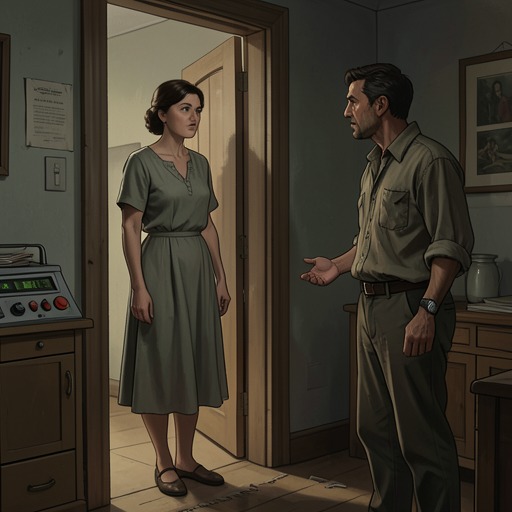
The proposal occurs late in Saleem’s reminiscences, in the heat of August. He has been so absorbed in his account that he does not initially hear Padma’s words and asks her to repeat them. She proposes marriage in order to look after him without inviting the world’s disapproval. The stated reason combines affection with a concern for how their arrangement will be seen by others; the scene presents her as both caring and resolved.
Saleem responds by listing reasons the marriage might be unwise, including his fears about his body, his past, and the possibility that he will die violently. Padma refuses to be diverted by his warnings or elaborate reasoning. Her answer turns the argument away from his catalogue of dangers and toward the future. When she suggests that they marry on his birthday, she makes the plan concrete rather than leaving it as an abstract promise.
Saleem accepts meekly, with the appearance of gratitude, and calls himself newly affianced. His consent is real, but it is shadowed by what he believes he knows: he cannot tell Padma that he expects death on that day. His acceptance thus holds two responses together. He receives her offer of care, yet withholds the fear that might make the agreement impossible for her to assess on his terms.
Care Against Fatalism
Padma’s proposal briefly unsettles Saleem’s conviction that the ending has already been decided. He imagines that her will and solicitude might alter the course of his story, and the marriage proposal seems almost to release him from fate. But he immediately qualifies that possibility: love does not necessarily defeat death, and a ceremony cannot undo the damage he expects. Hope appears in the narrative as a genuine possibility he has not allowed himself to consider before, not as a guarantee that his prediction is false.
This tension makes their relationship more than a conventional romance ending. Padma offers companionship and care at the very point when Saleem is imagining his life closing. He accepts the offer without resolving the conflict between her future-facing determination and his belief in an inevitable death. The proposal therefore creates a possibility rather than securing a happy outcome: the relationship can imagine a shared life, but the narrative refuses to confirm that they will reach it.
The Unwritten Wedding and the Crowd
In his final movement from remembered past toward imagined future, Saleem pictures himself reaching his thirty-first birthday and marrying Padma. In that forecast, she has henna on her palms and soles and may take a new name in honor of Reverend Mother. Fireworks and crowds mark Independence Day, and the couple intend to travel to Kashmir with train tickets in Saleem’s pocket. These details give the engagement a prospective shape: a wedding, a journey, and a destination beyond the life Saleem has been recounting.
The same vision turns against its promise. The crowds grow until they make progress impossible; Saleem and Padma are separated, and he imagines her reaching toward him before she disappears into the multitude. He foresees himself being crushed and dying without reaching Kashmir. This is a prediction within Saleem’s narration, not a completed account of the marriage or its aftermath. The relationship ends at the edge of that unresolved future: Padma has proposed, Saleem has accepted, and the life they intend to share remains caught between her insistence that there is a future and his story’s forecast of its destruction.